
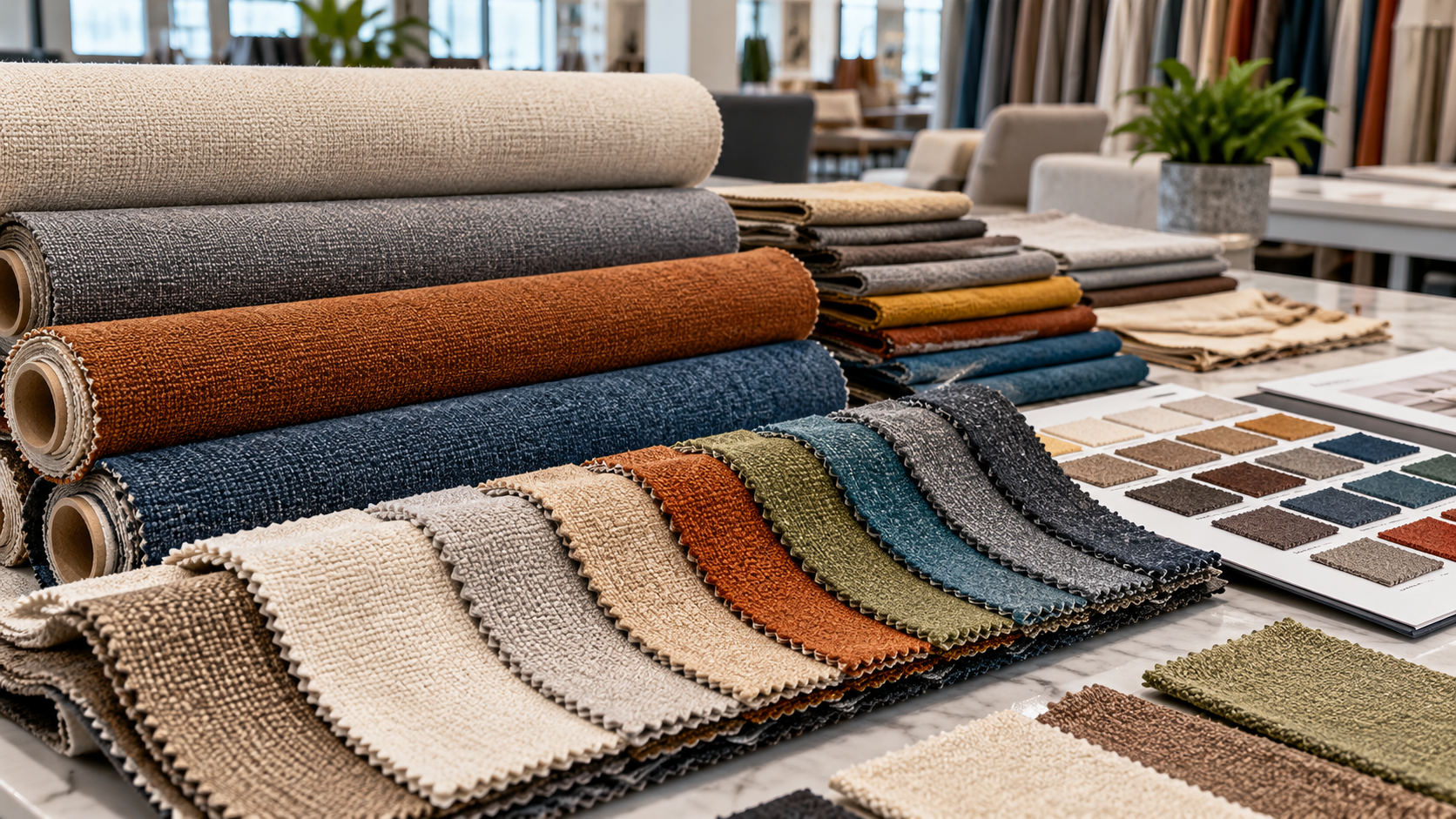
China fabric sourcing for furniture upholstery is not simply a matter of selecting a fabric and requesting a price. For furniture manufacturers, fabric importers, hospitality buyers and commercial project teams, the real work starts long before the purchase order is placed.
Successful sourcing begins with defining the application, confirming technical specifications, reviewing samples, understanding MOQ and production lead time, and establishing clear quality expectations before bulk production starts. The more thoroughly these details are planned upfront, the easier it becomes to compare suppliers, reduce sourcing risks and avoid costly issues later in the production process.
This fabric sourcing guide walks through the key stages of sourcing upholstery fabric from China—from preparing your specifications and evaluating samples to managing MOQ, lead time, quality control and shipment requirements—helping B2B buyers make more informed sourcing decisions.
Quick Answer
Sourcing furniture upholstery fabric from China will be required: Application submission, technical specification, identify suppliers based on your need and review fabric samples. Make sure to verify lead time, MOQ, testing and quality checks while going for mass production approval. The last step is to inspect finished fabric and verify packing, label and shipping documents before dispatch.
Why China Fabric Sourcing Works for Global Furniture Buyers
China offers an extensive manufacturing ecosystem for furniture upholstery fabric, with suppliers producing a wide range of fabric constructions, compositions, colors and functional finishes.
For furniture buyers, this provides access to far more than finished fabric collections. Depending on the supplier and project requirements, sourcing may also involve weaving, knitting, dyeing, printing, backing, color development and functional finishing.
This manufacturing capability allows buyers to source fabrics for residential furniture, hospitality seating, commercial interiors, outdoor applications and other specialized projects while accommodating different technical and design requirements.
Some projects are relatively straightforward. A buyer may select an existing fabric, choose an available color and proceed with sampling. Others require additional development, such as creating a custom shade, modifying the backing, adjusting the hand feel or applying a performance finish suited to a specific application.
Ultimately, successful sourcing is not determined by price or appearance alone. Buyers should also evaluate whether a supplier can consistently meet technical specifications, communicate effectively throughout development, maintain reliable quality standards and support the project from sampling through bulk production.
Start With a Clear Fabric Specification
Many sourcing problems begin with an inquiry that is too general. For example: “We need a durable gray fabric for sofas.”
That gives a supplier very little information to work with. A supplier still does not know whether the fabric is for residential sofas, hotel seating, office furniture or another application. The required composition, width, weight, performance level, finish and testing may also be unclear.
Before contacting a China fabric supplier, buyers should prepare the basic project requirements. These may include:
● Furniture application
● Destination or target market
● Preferred fabric type or construction
● Fiber composition
● Finished usable width
● Weight or GSM, where relevant
● Color or physical reference
● Quantity per color
● Required finish or backing
● Performance requirements
● Testing or documentation needs
● Target delivery or shipment date
The end use should come first. A fabric used on a low-use residential chair does not necessarily need the same performance characteristics as material specified for a hotel lobby sofa that will be used heavily throughout the day.
The destination market can also affect what information or testing is required. The same applies to functional properties. Depending on the application, buyers may also need specialized options such as easy-clean fabric or outdoor-performance materials. Instead of asking for a “waterproof fabric” or “fire-resistant fabric” without further context, explain where the material will be used and which requirement needs to be met.
Clear specifications help the supplier recommend more suitable products and allow the buyer to compare quotations on a more equal basis.
Review Upholstery Fabric Samples Before Bulk Production
A specification sheet provides valuable technical information, but it cannot fully replace a physical fabric sample. This is why upholstery fabric samples remain an essential part of the sourcing process.
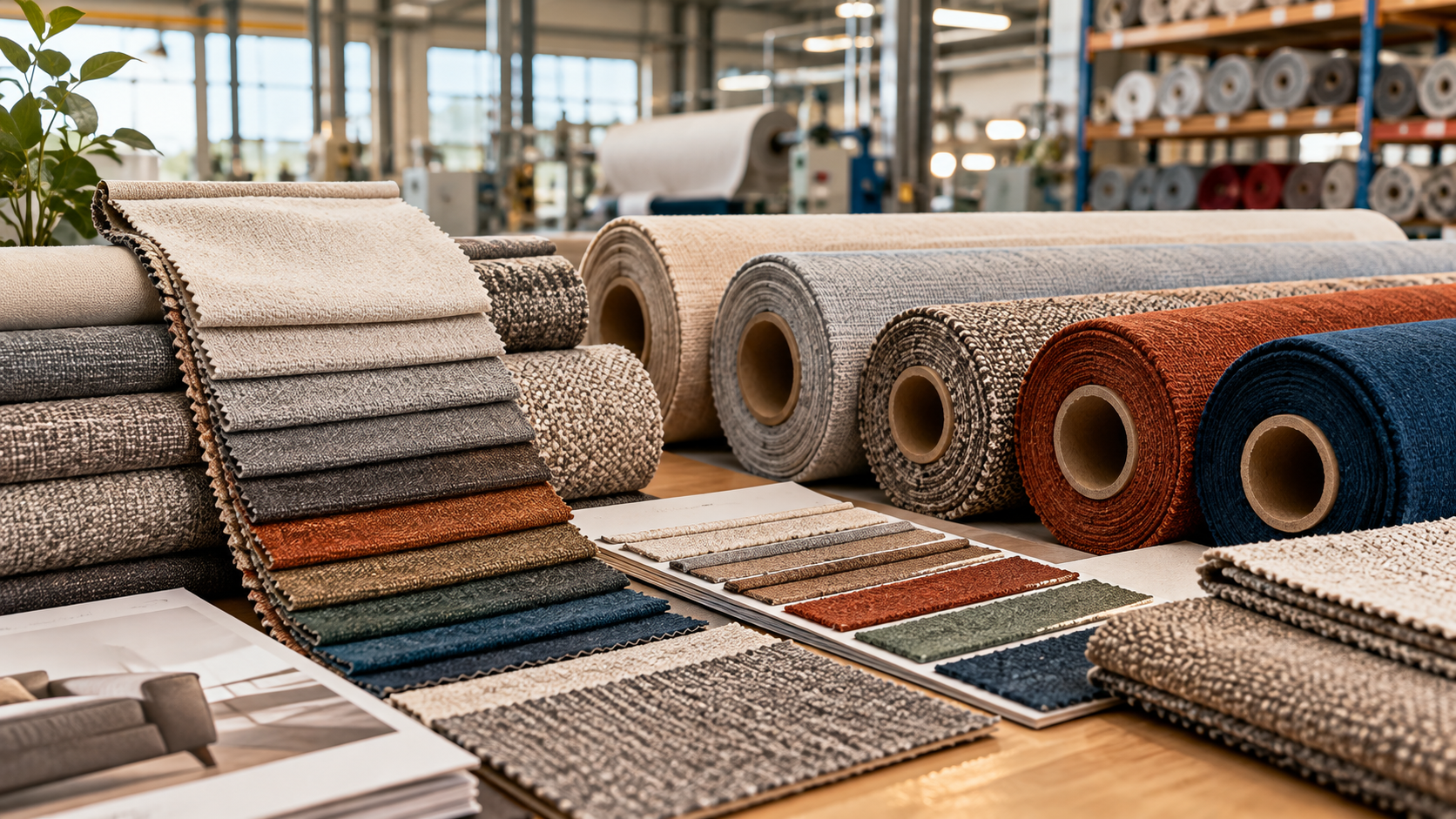
A sample allows buyers to evaluate important characteristics such as:
● Color and shade
● Texture and surface appearance
● Hand feel
● Fabric construction
● Fabric weight (GSM), where relevant
● Backing and finish
● Overall suitability for the intended application
When an existing product is selected, the supplier may provide a swatch, hanger or fabric cutting from the current collection.
Customized projects often require additional development. For example, a buyer may choose an existing fabric construction while requesting a new color. Other projects may involve modifying the backing, finish or another product characteristic to meet specific application requirements. Custom colors may also require a separate approval process, such as a lab dip or another color-reference method used by the supplier.
Sampling procedures vary between manufacturers, making it important to clarify exactly what will serve as the production reference before a bulk order begins.
“Which sample or specification will bulk production be compared against?”
Both the buyer and supplier should agree on the answer before production starts. Although an approved sample cannot eliminate every production variable, it provides a clear benchmark for evaluating the finished fabric and resolving questions that may arise during bulk manufacturing.
Planning a furniture or commercial upholstery project? Share your application, target market and performance requirements with EnjoyTex. Our team can recommend suitable upholstery fabric options and prepare samples for evaluation before bulk production begins.
What Affects Upholstery Fabric MOQ?
MOQ (Minimum Order Quantity) is often one of the first commercial questions buyers ask, yet it is also one of the most misunderstood.
There is no single MOQ that applies to every furniture upholstery fabric. Minimum order quantities vary depending on the product, production process and level of customization involved.
Common factors that can influence MOQ include:
● Stock availability
● Fabric construction and yarn availability
● Color and dyeing requirements
● Printing and backing
● Functional finishing
● Number of colors requested
● Custom development
● Overall order volume
For example, a fabric available in an existing color may have very different ordering conditions from the same construction produced in a new custom shade. Additional finishing or special treatments can also affect production requirements.
For this reason, buyers should go beyond simply asking:
“What is your MOQ?”
A more useful question is:
“Does the MOQ apply per fabric, per color, per design, per finish or to the total order?”
This distinction becomes particularly important when sourcing a furniture collection with multiple colors. While the overall project quantity may appear substantial, the volume assigned to each individual color could still fall below the production minimum for a specific dyeing or finishing process.
Understanding how MOQ is calculated at the beginning of the sourcing process helps buyers plan inventory more effectively, compare supplier quotations more accurately and avoid unnecessary changes after samples have already been approved.
What Affects Upholstery Fabric Lead Time?
Lead time is another important factor that should be discussed early in the sourcing process rather than treated as a fixed number.
A stock fabric that only needs to be packed and shipped follows a very different timeline from a custom development that requires color approval, production and additional finishing.
Depending on the order, the production timeline may include:
Sample development → Approval → Material preparation → Fabric production → Dyeing → Finishing → Testing → Inspection → Packing
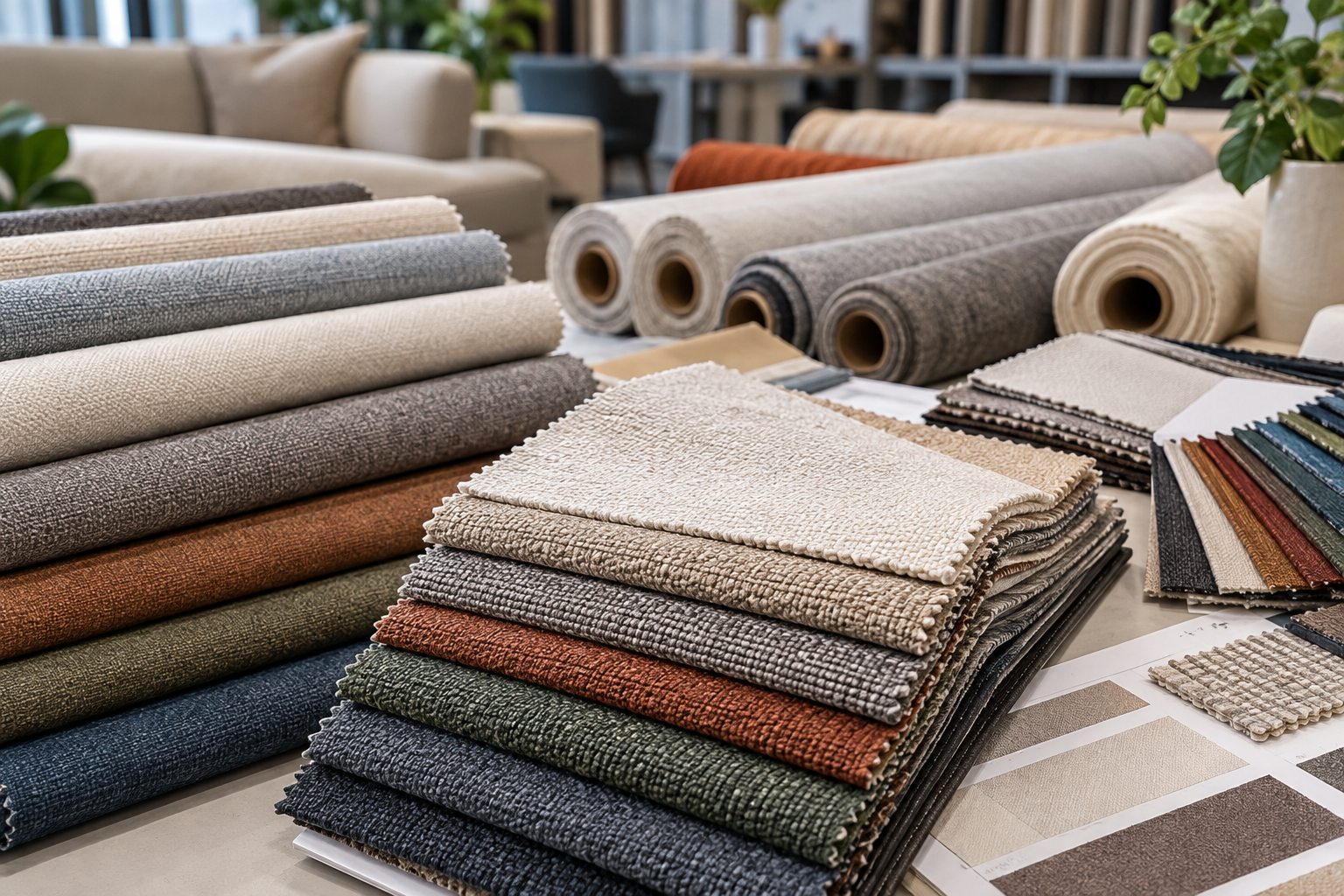
Not every order goes through every stage. The important point is to understand exactly what the supplier’s quoted lead time includes.
Buyers should also clarify when the timeline begins. For example:
● Is lead time calculated from the purchase order?
● From receipt of the deposit?
● From final color approval?
● From confirmation of the production sample?
These details can have a direct impact on a furniture manufacturer’s own production schedule. If a project involves custom colors, specialized finishes or additional testing, allow sufficient time for development and approvals rather than assuming it will follow the same schedule as a stock product.
Fabric Quality Control Should Begin Before the Final Inspection
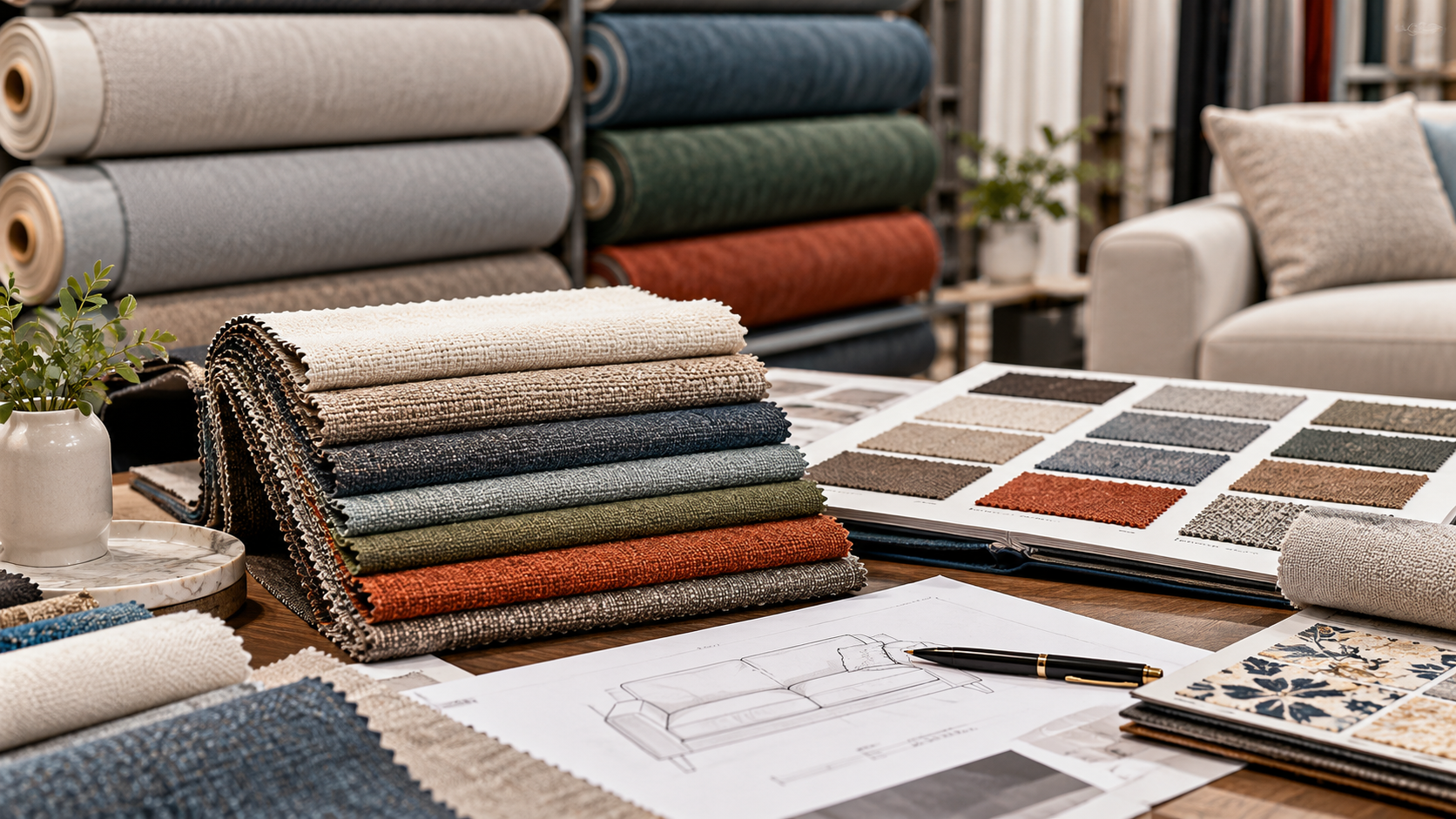
Waiting until fabric is packed for shipment is too late to decide what “acceptable quality” means. Effective fabric quality control starts much earlier.
The buyer and supplier should agree on the important product characteristics during specification and sampling. Bulk material can then be checked against those agreed requirements.
Depending on the order, quality checks may include:
● Color and shade consistency
● Surface appearance and visible defects
● Fabric construction
● Usable width
● Weight or GSM
● Backing and functional finish
● Roll length and order quantity
● Roll identification and packaging
● Required test documentation
Performance testing should also be tied to the intended application. Abrasion resistance is an important consideration for many upholstery fabrics, but it is not the only one. Depending on the project, buyers may also need to consider pilling, colorfastness, seam performance, breaking strength, UV resistance or other physical properties.
This is especially important when reviewing Martindale or Wyzenbeek results. A high abrasion result shows how the fabric performed under a specified laboratory test. It should not automatically be interpreted as a guarantee of how many years the fabric will last on finished furniture. Actual performance is affected by many factors, including the fabric construction, furniture design, maintenance, frequency of use and the environment in which the furniture is installed.
Professional buyers therefore evaluate the fabric against the requirements of the application rather than relying on one test number alone. Where a particular test or standard is required, confirm it before production and ask what documentation is available for the selected product.
Confirm Packing, Labels and Documents Before Shipment
The sourcing process does not end when the fabric passes inspection. Packing and shipping documentation can create costly delays if expectations are not clearly defined before dispatch.
Before shipment, buyers should confirm how each fabric roll will be identified. Useful information may include:
● Roll number
● Fabric or article number
● Color reference
● Dye-lot information, where applicable
● Quantity per roll (meters or yards)
● Shipping marks
● Outer packaging requirements
Clear roll identification is particularly helpful for buyers receiving multiple colors or large quantities into a factory or distribution warehouse.
Commercial shipments may also require documents such as a commercial invoice, packing list and the appropriate transport documentation. Additional documents may be needed depending on the destination country, customer requirements and shipment method.
Confirming these details before dispatch helps reduce shipment delays, simplifies receiving and minimizes avoidable issues once the goods arrive at their destination.
Furniture Upholstery Fabric Sourcing Checklist
| Item to Check | Why It Matters | What to Ask the Supplier |
| End use | Determines the level of performance required | Which fabrics are suitable for this application? |
| Construction & composition | Influences appearance, feel and performance | What is the exact construction and fiber composition? |
| Width & weight | Affects cutting yield and production planning | What are the usable width and fabric weight? |
| Color | Reduces the risk of shade disputes | How will the final production color be approved? |
| Sample | Establishes a reference for production | Which approved sample will bulk production follow? |
| MOQ | Affects purchasing and inventory planning | Is the MOQ per color, design, finish or total order? |
| Lead time | Affects the buyer’s own manufacturing schedule | When does lead time start and what stages are included? |
| Testing | Helps verify application requirements | Which test reports are available for this fabric? |
| Quality control | Helps identify problems before shipment | What checks are carried out on bulk production? |
| Packing | Supports receiving and traceability | How will the rolls be labeled and packed? |
| Export documents | Helps avoid shipment delays | Which documents will accompany the order? |
Common Mistakes When Sourcing Furniture Upholstery Fabric
1. Comparing Suppliers on Price Alone
Unit price is important, but the lowest quotation does not always result in the lowest overall sourcing cost. Such problems like color inconsistency, incorrect width, unsuitable performance or finishing defects can delay production time and offset the savings of a lower-priced offer. To make a fair comparison, provide each supplier with the same specifications and evaluate quotations against the same requirements. Reviewing common fabric quality issues in advance can also help buyers identify potential concerns before production begins.
2. Approving Bulk Production Before You’re Really Sure
Photos and digital color references are useful during initial discussions, but they may leave room for interpretation. Whenever possible, establish an approved physical sample or another clearly defined production reference before bulk manufacturing begins.
3. Sending Out an Inquiry That’s Just Not Detailed Enough
5,000 meters of velvet” sounds like a fairly detailed request, but a supplier would still need more information before providing an accurate quotation. What type of velvet do you need? What are the required composition, width and color? How will the fabric be used? Are there any performance or testing requirements? Sharing these details from the beginning helps the supplier understand what you actually need, recommend the right fabric and quote the order more accurately.
4. Assuming Certification Applies to Every Fabric
Some fabrics may come with specific test reports or certifications, while others from the same supplier may not. That is why it is worth checking the documentation for the actual fabric you plan to order. If your project has specific compliance requirements, confirm which tests or certifications apply to that product before moving forward.
5. Putting Off Talking About Quality Requirements Until the Bitter End
Final inspection should confirm the quality requirements agreed upon earlier in the sourcing process, rather than introduce new expectations. Discuss these requirements before production begins so both the buyer and supplier have a clear understanding of what the finished fabric is expected to meet.
How EnjoyTex Supports Global Furniture Fabric Buyers
EnjoyTex works with furniture manufacturers, importers and commercial buyers worldwide. Buyers can share their intended use, fabric preferences, color, quantity and performance needs so we understand what the project calls for.
From there, our team can suggest suitable fabrics, arrange samples and discuss any customization before production. Testing and supporting documents can also be reviewed when needed.
Getting these details clear early helps keep everything on track from sampling through bulk production.
Frequently Asked QUESTIONS
1. What do you need to send to a china upholstery fabric supplier?
Provide them the required application, target market, type of fabric you’re looking for, tell them about the fabric composition, color, how many you need, what performance expectations there are and when you need it. Include any required testing or documentation in the initial inquiry.
2. Should you ask for samples of upholstery fabric BEFORE you order a bunch?
It’s the only way you can get a good feel for what the fabric is going to look and feel like, and you can also check the quality of the color, the texture, the construction of it all. Sometimes with custom fabrics may require some extra work to get the color right or to get the design right.
3. What determines the minimum order quantity (MOQ) for upholstery fabric?
MOQ can be affected by a variety of different factors such as how much stock the supplier has on hand, composition, the yarn quality, color, printed on, the backing material, finish. You should always double check with your supplier to see if the MOQ they give you is for one specific color or design, or if it’s just the whole order.
4. How do you check the upholstery fabric before it ships out?
The fabric inspection requirements are pretty straightforward and depend on what kind of fabric you are ordering and what you specifically need for the job. You typically need to check for things like color consistency, appearance, finishing, labeling, packing and text documents.
5. How can you reduce your risk when buying upholstery fabric from China?
Start with specifications, then review all samples before mass production, check MOQ and lead time, quality checks, verify packing and shipment requirements before dispatch.
A Better Sourcing Process Starts Before the Order
The process of china fabric sourcing isn’t as simple as finding the lowest quote – it’s about finding ways to reduce uncertainty right from the start of the sourcing process. Start by getting your application and specs in order. Give those fabric samples a careful review – don’t just skim them. And before you start, make sure you understand how minimum order quantities (MOQ) and lead times are going to affect your project. You should also agree on those quality expectations with your supplier before they start production. For furniture makers, importers and commercial buyers, doing this preparation makes it much easier to evaluate suppliers, reduce sourcing risks, and manage your fabric orders with a lot more confidence. Planning a furniture or contract upholstery project? Send us the details of your project – what you’re making, who you’re making it for, how much you need, and what kind of performance you need from the fabric. Enjoytex will walk you through some suitable fabric options and send over samples for your evaluation.