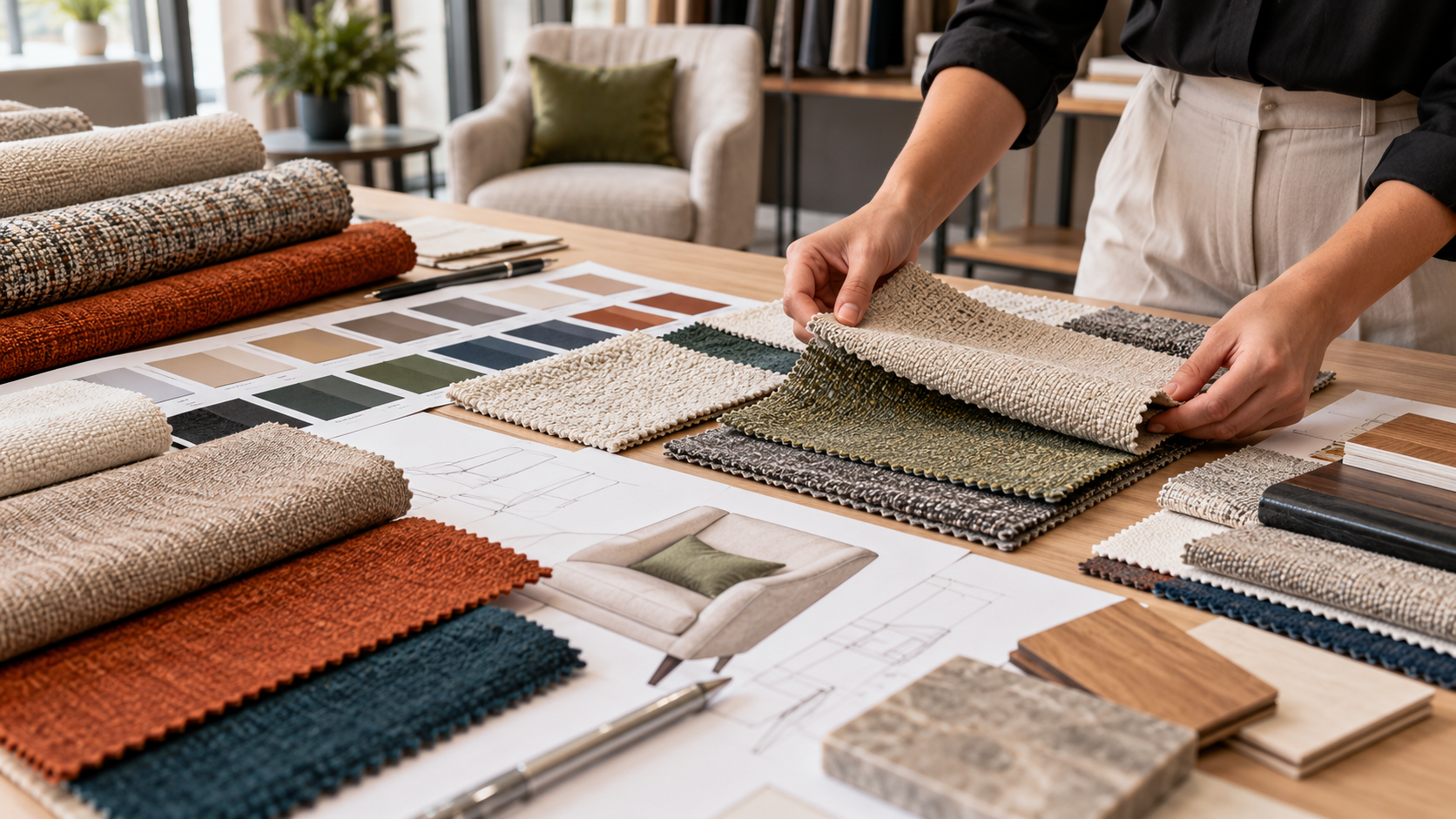

Choosing the right upholstery fabric is about more than selecting a color or texture you like. The right fabric affects the appearance, comfort, durability and overall performance of your furniture.
Whether you are sourcing fabric for residential furniture, commercial seating or outdoor applications, understanding the key requirements before bulk production can help you make a more confident decision.
1. Consider the Application
The first step is to understand where and how the furniture will be used. Different environments require different levels of durability, comfort and performance.
Residential:
For sofas, lounge chairs and dining chairs, comfort, appearance and easy maintenance are usually key considerations.
Commercial / Contract:
Hotels, offices, restaurants and public spaces often require fabrics designed for frequent use and stronger performance requirements.
Outdoor:
Outdoor furniture requires materials that can better handle sunlight, moisture and changing environmental conditions.
Selecting fabric based on its intended application helps reduce problems later in the production process.
2. Understand Fabric Performance
Appearance is important, but performance should also be considered before making a final selection.
Some common factors include:
- Durability: Consider abrasion resistance for furniture that will receive frequent use.
- Pilling Resistance: Helps maintain a cleaner surface appearance over time.
- Color Fastness: Important where fabrics may be exposed to light or regular use.
- UV Resistance: Particularly relevant for outdoor and sun-exposed applications.
- Water Repellence: Useful for outdoor, hospitality and easy-maintenance applications.
- Tearing Strength: Helps evaluate how the fabric may perform under physical stress.
The exact testing requirements may vary depending on the market, application and buyer specifications.
3. Match the Look and Feel
Fabric plays an important role in the overall character of a furniture collection.
Chenille can create a soft and comfortable appearance, while boucle offers a distinctive textured surface. Velvet can provide a more refined look, while linen-look and woven fabrics work well for clean, contemporary furniture designs.
When comparing fabrics, consider:
- Texture and hand feel
- Color direction
- Weave structure
- Furniture style
- Target market
- Interior environment
A fabric should not only perform well — it should also support the visual direction of the final product.
4. Request Samples Before Bulk Production
Whenever possible, reviewing physical samples before placing a bulk order is an important part of the sourcing process.
A sample allows you to evaluate the fabric in real conditions and review important details such as:
- Actual color
- Texture and softness
- Fabric weight
- Surface appearance
- Compatibility with your furniture design
For customized projects, sampling can also help confirm colors, finishes and specifications before moving into larger-scale production.
Conclusion
Choosing upholstery fabric requires a balance between design, performance and practical application.
By clearly defining where the fabric will be used, reviewing its performance requirements and checking physical samples before bulk production, buyers can make more informed sourcing decisions.
EnjoyTex supports global furniture brands, importers, wholesalers and project buyers with fabric sourcing, sampling, development and quality coordination.