Selection of outdoor upholstery fabric for a furniture range is about more than finding a material which is described as being suitable for outdoors. A sofa for the patio, terrace chairs for a hotel, a lounge chair at the pool, and an easily removable cushion can all have widely varying levels of sun exposure, moisture, abrasion, cleaning, and daily-use requirements.
In other words, for furniture manufacturers, brands, hospitality buyers, and procurement professionals, selection of outdoor furniture fabric is not simply a matter of choosing the material. It also means taking into consideration the performance requirements that material needs to meet for the intended usage environment.
This guide covers how to assess performance outdoor fabric by material, application, testing, customization, and the ability of a supplier to fulfill the requirements. It also compares typical outdoor fabric choices and provides the key considerations buyers need to address before requesting samples or approving bulk production.
What Is Outdoor Upholstery Fabric?
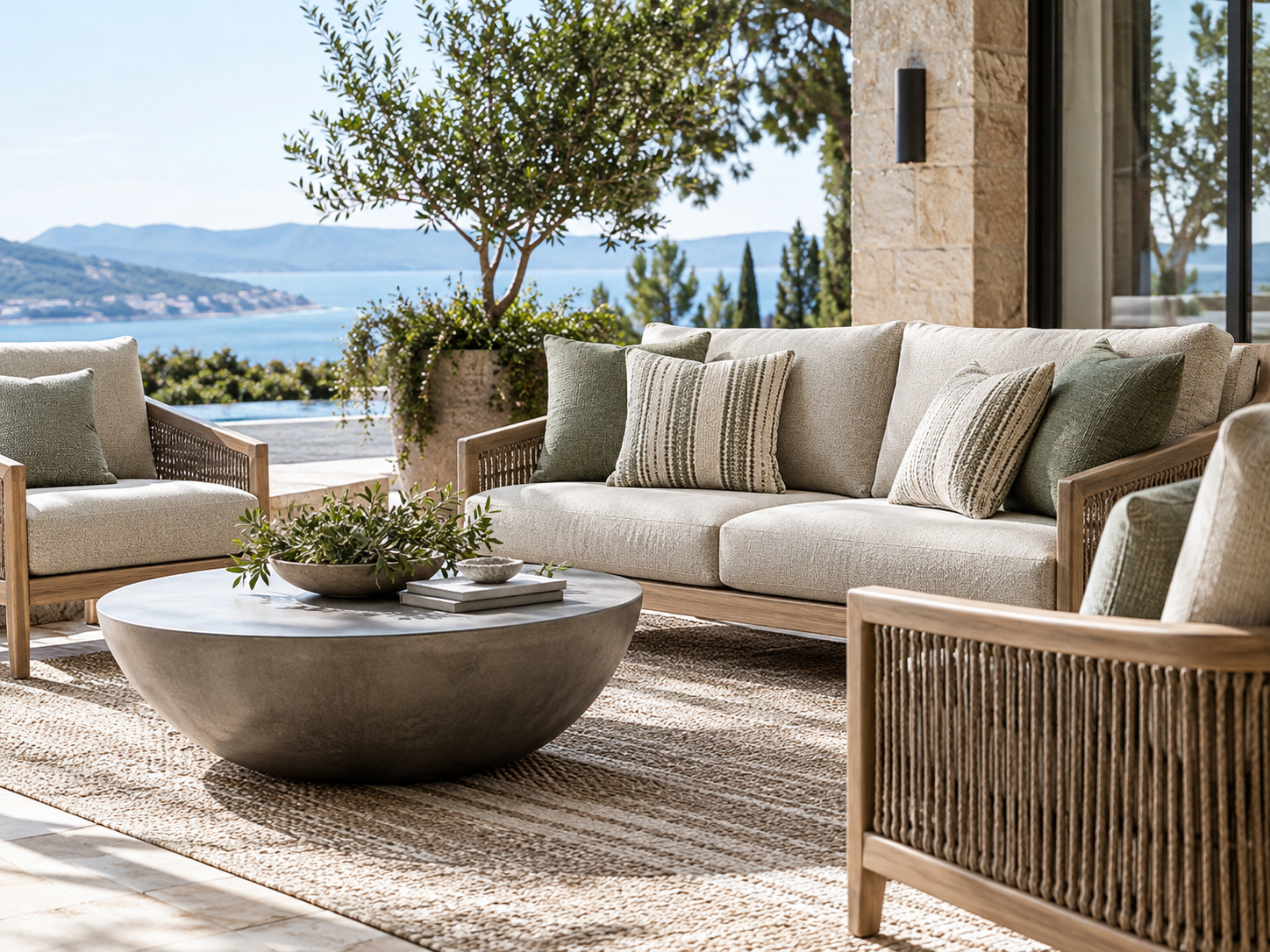
Outdoor upholstery fabric refers to fabric that has been created or selected for use on furniture placed in outdoor or partly covered spaces. It includes fabric for patio sofas, terrace seating, dining chairs, lounge chairs, benches, and fabric for outdoor cushions.
What distinguishes it from regular indoor upholstery fabric is the environmental conditions it needs to withstand. These may include exposure to intense sunlight, moisture, humidity, dust, regular cleaning, and heavier use, depending on whether the furniture is placed in a partly covered area or a more exposed setting such as a hotel terrace. It is therefore not enough to simply say “outdoor fabric,” because a weather resistant upholstery fabric may have very different performance requirements from one application to another.
It is therefore necessary for the buyer to consider the fabric based on its construction, fiber content, finishing, and the specific demands of the actual project.
In B2B sourcing, it is better to begin by considering the particular piece of furniture where the fabric will be used. From there, it becomes easier to choose the right furniture upholstery fabric.
Why Outdoor Furniture Brands Need Performance Fabrics
Choosing a fabric for a piece of furniture is not only about the aesthetics of that product. Outdoor furniture is used for months, and after being installed in hotels, restaurants, resorts, and retail outlets, any fabric issue can become much costlier to solve.
And here comes the importance of performance outdoor fabric. Such materials should be chosen depending on the conditions the furniture will be exposed to. Seating furniture located under a covered terrace may require different materials than pieces that will stay near a swimming pool or in the sun all day long.
The same goes for commercial outdoor upholstery fabric. The increased stress of frequent use and cleaning, moisture, and UV exposure can place additional requirements on such materials. When buying these products, buyers should look beyond just the colors and textures and make sure the right performance parameters are considered for the particular application.
By defining such requirements prior to sampling, buyers give the supplier more grounds for suggesting suitable fabrics, and comparing different materials using the same criteria becomes easier. It will also make the process of fabric inspection and textile testing much more helpful, as the performance requirements will already be defined before bulk production.
Key Performance Requirements for Outdoor Upholstery Fabric
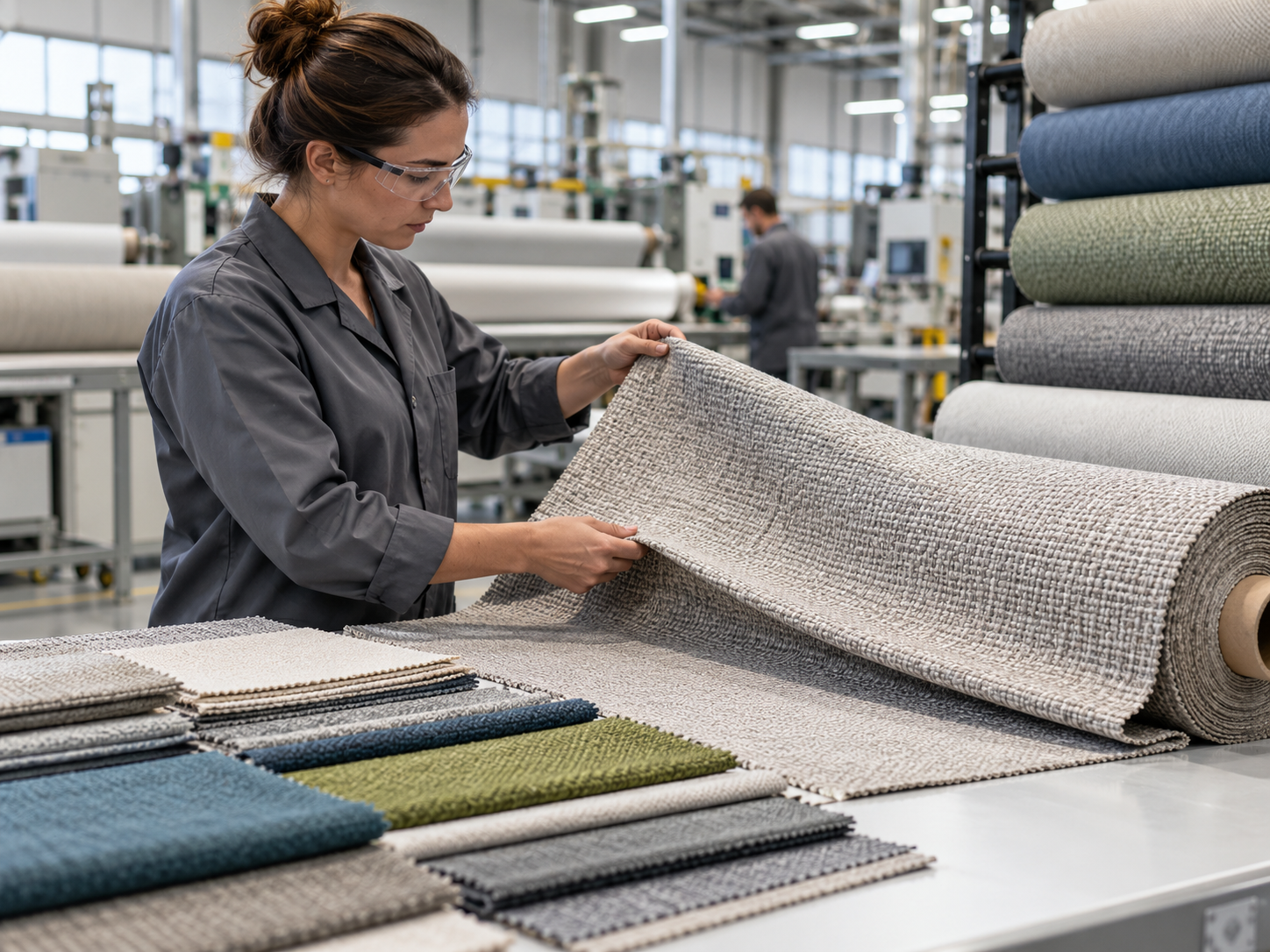
The performance criteria for outdoor upholstery fabric must depend on its location and usage conditions. A covered restaurant terrace, an open-air resort lounge area, or seating by the pool may not all require the same protective features.
Here are some important considerations for the buyer to evaluate before approving any fabric.
UV Resistance and Colorfastness
Long-term exposure to sunlight can change the color and appearance of outdoor fabrics. Buyers of furniture intended for use in an exposed area should learn how the fabric was tested for lightfastness, rather than rely on the mere declaration that it is UV resistant outdoor fabric.
For instance, ACT’s voluntary guideline for woven outdoor upholstery refers to AATCC 169 or AATCC 16.3, at a minimum Grade 3 after 1,000 hours of exposure. However, laboratory hours should not be directly translated into years of service for a fabric in the open air.
What matters to a buyer is whether the test procedure and its results are applicable to the intended use.
Water Resistance and Drying Speed
An outdoor furniture piece may be exposed to rain, spills, moisture, or wet clothing. While a water resistant outdoor fabric may minimize surface wetting, water resistance does not necessarily mean the finished upholstered product is waterproof.
This difference is important when analyzing a supplier’s technical data. For example, AATCC TM22 evaluates how well a textile material resists surface wetting under a spray test. This does not necessarily mean that the entire cushion or upholstered furniture piece is waterproof.
Drying speed is another important factor, particularly for poolside and unprotected furniture.
Mildew Resistance
Moisture, humidity, dust, and slow drying can make the maintenance of outdoor furniture more challenging. When choosing mildew resistant outdoor fabric, buyers should find out which treatment, material feature, or testing supports this particular property.
There are other factors involved as well. Cushion filling, drainage, ventilation, cleaning frequency, and the amount of time the furniture remains wet should also be taken into account.
Abrasion and Surface Wear
Furniture in hotels, restaurants, resorts, or other commercial establishments often receives much heavier use than furniture designed for a private patio setting. Abrasion testing can therefore give buyers an idea of how a fabric performs under repeated rubbing and friction.
Martindale and Wyzenbeek tests are commonly used. It should be noted, however, that a high abrasion value does not automatically guarantee a longer furniture lifespan. ACT’s abrasion guidance also notes that several factors can affect the durability and appearance of upholstery in actual use.
Cleanability and Other Physical Properties
Cleaning is an important requirement for outdoor furniture, so buyers should know which cleaning process is recommended and whether it is suitable for the intended environment. In some cases, depending on the furniture type and material construction, pilling, tearing and breaking strength, seam performance, and wet or dry crocking may require additional attention. These areas are also covered in ACT’s outdoor physical-properties guidelines.
Instead of trying to find one single specification that would make a particular fabric “outdoor grade,” B2B buyers should agree with the supplier on the performance requirements for the particular application and review the available testing data before bulk production.
Common Materials Used in Outdoor Upholstery Fabric
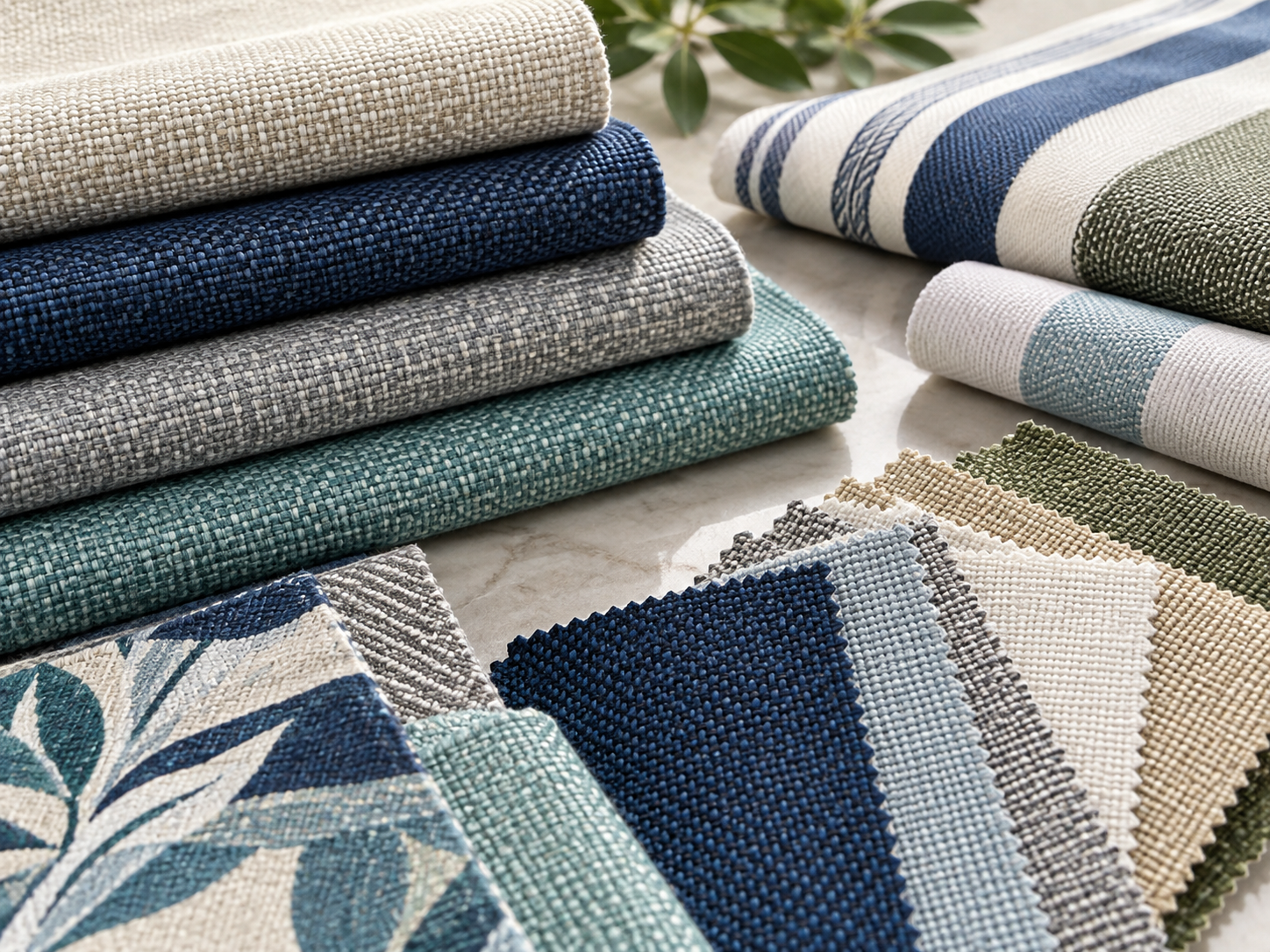
The name of the fiber material does not say everything about how an outdoor upholstery fabric will behave in a particular situation. Dyeing process, construction, finishing, and test results might vary and affect performance.
Nevertheless, acrylic, olefin or polypropylene, and polyester are commonly selected materials for outdoor applications.
Solution-Dyed Acrylic
Solution dyed acrylic fabric is commonly used for cushions, patio furniture, hospitality seating, and other projects where UV resistance and durability are required.
During the process of solution dyeing, the color pigment is introduced during production of the fiber rather than applied to its surface later. That is the reason why this material is commonly selected for outdoor applications where colorfastness is needed.
Buyers should realize that there could be differences between various acrylic fabrics regarding construction, finishing, test method, and the requirements of the project.
Olefin or Polypropylene
Olefin outdoor fabric (polypropylene fabric) is also commonly used for cushions and outdoor upholstery. Olefin has low moisture absorption properties, which makes it suitable for certain applications where moisture and drying of fabric are an issue.
Also, olefin fabric is soft enough to be used for cushions while providing enough strength for outdoor conditions. Some commercial outdoor collections include 100% olefin for cushions and pillows; others might contain coated polyester combined with olefin.
Just as in the case with acrylic, buyers should check the actual UV, abrasion, colorfastness, and cleaning information for the selected construction instead of making conclusions based only on the fiber name.
Polyester
Polyester outdoor fabric is available in various constructions and price points. Performance of polyester depends on the manufacturing process, dyeing, and finishing processes of the fiber.
Polyester can be used for cushions and conventional upholstery; coated polyester constructions are also popular for sling furniture. For example, vinyl-coated polyester might be useful for applications where dimensional stability of the fabric in a tensioned state is required.
For B2B buyers, this situation provides certain flexibility as well as an opportunity to choose between very different fabric constructions. Two polyester fabrics might look similar but have completely different technical parameters.
That is the reason why B2B buyers should focus on comparing the construction and test information instead of just picking one of acrylic, olefin, or polyester materials.
Outdoor Upholstery Fabric Comparison Table
The following chart is provided to allow buyers to easily assess the general features of outdoor upholstery fabric. The exact performance of any particular fabric is going to depend on its construction, dyeing process, finishing, and testing.
| Fiber | Outdoor advantages of common fibers | Buyers should be aware of | Common business to business applications |
| Solution dyed acrylic fabric | One of the most popular fabrics because of high colorfastness, durability and comfort | Results of UV & lightfastness tests, abrasion, cleanability, construction and finishing | Patio sofas, hotel terraces, resort furniture, cushions |
| Olefin outdoor fabric | Low moisture absorption, quick drying, appropriate for many cushion applications | UV performance, abrasion, colorfastness, cleaning procedure and construction | Outdoor cushions, poolside furniture, patio furniture, hospitality projects |
| Polyester outdoor fabric | Numerous constructions, finishes and prices; also available with a coating for special applications | Dyeing process, coating/finish, UV performance, abrasion, moisture absorption and dimensional stability | Cushions, traditional upholstery, sling furniture, commercial outdoor furniture |
This chart is only going to serve as the basis for comparison, and not as the source of definite material selection decisions.
For example, when looking for a fabric with high colorfastness for use in an outdoor area that is exposed to a lot of UV rays, the buyer may consider solution-dyed fabric. In cases where moisture and drying issues are important, the buyer may look at low-moisture-absorbing olefin or another suitable fabric. Coated polyester could be an option where dimensional stability is important.
The point is to compare the characteristics of the fabric against the requirements of the particular furniture application.
How to Choose Outdoor Fabric by Application
While there is not one outdoor upholstery fabric suited to every piece of outdoor furniture, it is far better to start with the application and select the combination of materials and performance you require.
Patio Sofas
Patio sofas may require a combination of comfort, aesthetics and outdoor performance. While outdoor furniture placed in an uncovered space will require more focus on UV resistance, water resistance and drying, seating covered by a patio might not require such high levels of protection against exposure but could still benefit from considerations around cleanability and abrasion.
Outdoor Cushions
In the case of fabric for outdoor cushions, buyers need to keep in mind not only the face fabric but moisture absorption, drying times, cushion filling, drainage and ventilation, which will influence the final performance of the cushion.
Removable cushion fabrics will also need to be checked to confirm their requirements regarding cleaning.
Hotel and Resort Furniture
Furniture installed on hotel terraces, resort lounges and outdoor dining areas will receive more frequent use than residential pieces. In such cases, commercial outdoor upholstery fabric may need to withstand higher abrasion, cleaning and colorfastness requirements in addition to UV and other environmental factors.
Buyers can take into account the frequency of cleaning and whether the cleaning process required by the fabric fits into the hotel maintenance schedule.
Poolside Furniture
Pool furniture will come into contact with wet swimwear, towels, humidity and bright sun regularly. A water resistant outdoor fabric will be beneficial in such cases, but buyers may want to pay more attention to drainage and drying time.
In places where the furniture is exposed to sunlight for prolonged periods of time, UV resistant outdoor fabric should be tested rather than relying on descriptions provided by the manufacturer.
Commercial Outdoor Seating
Commercial outdoor furniture in restaurants, cafés and other establishments is exposed to intensive use and cleaning. In such cases, buyers will need to concentrate on abrasion resistance, seam performance, cleanability and fabric construction stability.
The point here is to make sure that the fabric you choose is appropriate for the conditions of actual use. Once the application, exposure level and usage are determined, buyers can check outdoor upholstery fabric options and request samples before making a production decision.
CTA: Request Outdoor Fabric Samples
Customization Options for B2B Buyers
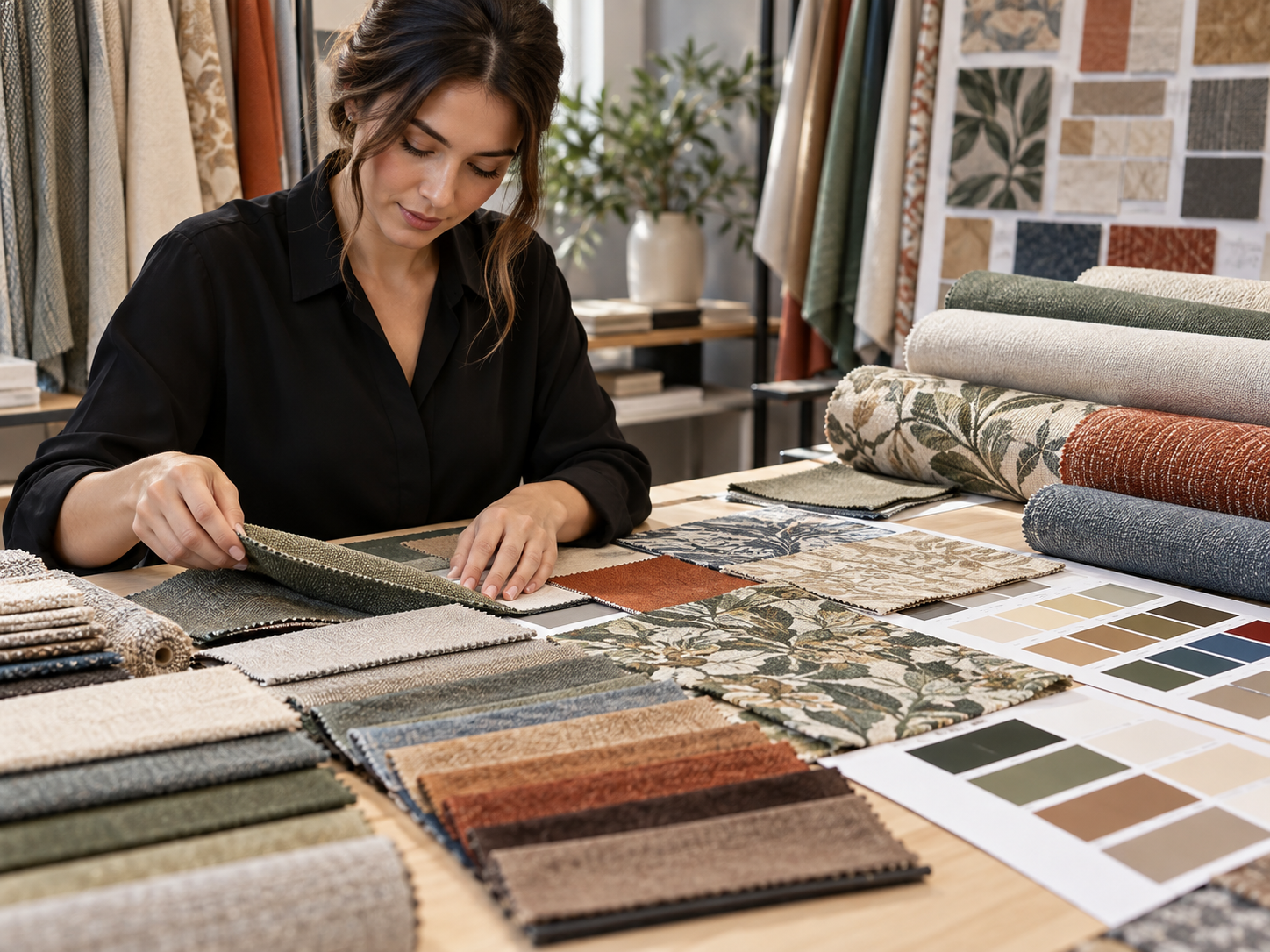
While a standard collection of fabrics might be fine for some applications and B2B buyers, sometimes a project would benefit from developing custom outdoor fabric, especially if it comes to launching a new furniture collection.
The first option is that a buyer might want to add a new color to the existing range, while the other option is the need for a more specialized development.
Options for Customization of Outdoor Fabrics
Depending on the fabric type and manufacturing process, customization may involve:
- Custom colors based on a physical sample or a color reference
- Pattern or design development
- Changes in the fabric construction
- Finishing requirements
- Performance requirements depending on the application of the fabric
- Scale, repeat and color options for printed fabrics
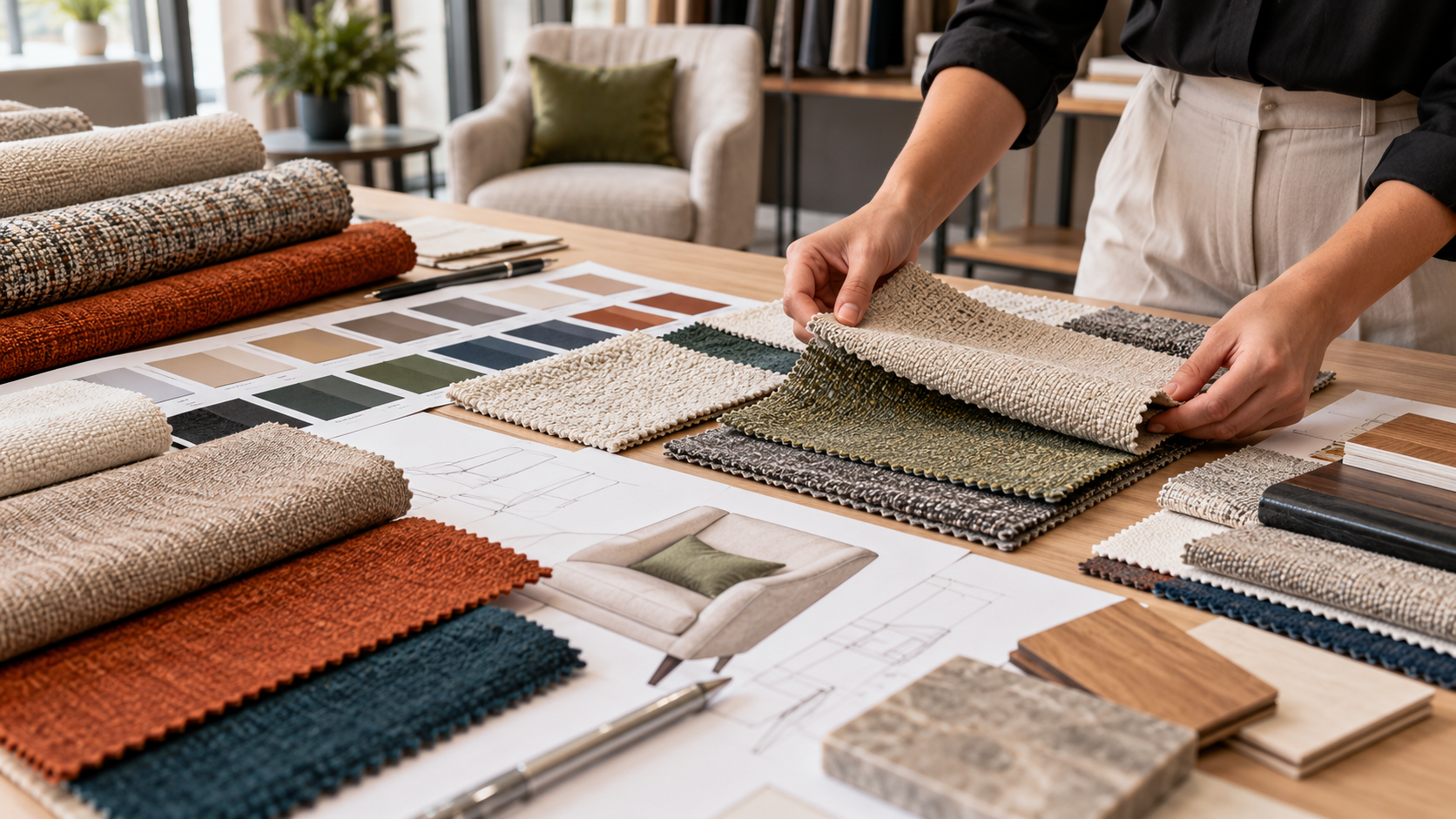
Customization of color is probably the most frequent request. The customer may have a fabric sample, color reference or any other acceptable standard, so the manufacturer will understand the direction for development. A lab dip or some other sample will be made by the manufacturer for review before production.
Performance requirements should also be discussed at this stage. If the finished furniture will be used on a hotel terrace, pool area or any other challenging application, the custom fabric should not lose some important properties, including UV resistance, cleanability and abrasion performance.
MOQ and lead time might also differ when it comes to customized development. If the buyer needs a new color, special finishing or a modified construction, the minimum order quantity and lead time for development will be different from the standard fabric.
That is why it is necessary for B2B buyers to specify the application, color or design reference, MOQ and performance requirements before the development starts. EnjoyTex can help with designing custom upholstery fabrics depending on the requirements.
CTA: Get a Custom Fabric Recommendation
Common Mistakes When Sourcing Outdoor Upholstery Fabric
Even if a fabric passes the initial sampling process, there could be issues in the sourcing process if the performance requirements had not been established prior to production. For B2B buyers, it would be good to avoid the following mistakes.
1. Selecting a Fabric Based Only on Visual Attributes
Color, texture, and hand feel do play a role, but these characteristics should not be the basis for the selection of outdoor upholstery fabric. Other factors to be considered by buyers include the intended purpose of the fabric and the required cleaning and exposure.
2. Assuming That All “Outdoor” Fabrics Possess the Same Performance
One fabric being outdoor does not mean that the performance is the same as another. It is still necessary for a buyer to ensure that the fabric meets the requirements of the specific application using the available test data.
3. Approving Bulk Production Without an Approved Physical Sample
While pictures and other visual aids such as color references help in development, they may not be sufficient for final approval. When possible, buyers should develop a physical sample or another type of reference for production.
EnjoyTex can provide fabric sampling services whenever the buyer needs to evaluate samples and colors for approval before production.
4. Considering Only the Fiber Name
Polyester, acrylic, and olefin fibers can be used in outdoor furniture. However, the performance of these fibers can depend on the construction, dyeing, coating, and finishing.
5. Overlooking the MOQ, Lead Times, and Custom Fabric Requirements
MOQs and lead times for custom outdoor fabric may differ from those of a standard fabric. New colors, customized finishing, or modified constructions can change the MOQ and lead times.
These should be addressed during pre-production discussions before the buyer spends time approving colors and samples.
6. Using Final Inspection as the Time to Address Quality
Quality should be agreed on before production starts. Final inspection should verify the quality previously agreed upon, not create new quality requirements.
Instead, the better approach would be to establish the application, performance requirements, sample reference, and commercial conditions before production.
Sample Testing Checklist Before Bulk Orders
Prior to making a bulk purchase, it is important to compare the sample with the actual needs of the furniture project. Do not approve the sample just because the color and appearance seem right.
- Color: The shade should be compared with the approved reference and under appropriate lighting.
- Water resistance: The way in which the fabric reacts to water or any other substance that might get spilled on it should be verified.
- Drying time: Verify how long it takes for the material and cushioning system to dry after exposure to moisture.
- Texture: It is important that the feel and texture are suitable for the intended seating application.
- Seaming: Check the behavior of the fabric when it comes to cutting, sewing and seam work.
- Abrasion resistance: The result from the relevant abrasion test should meet the expected level of use.
- Cleanability: Verify the recommended cleaning method and its suitability for the project.
- Batch uniformity: Verify that the bulk production will be checked against the approved sample for color, construction and finish.
The approved sample should provide a clear production reference for both parties before the bulk order moves forward.
Supplier Checklist for Outdoor Upholstery Fabric
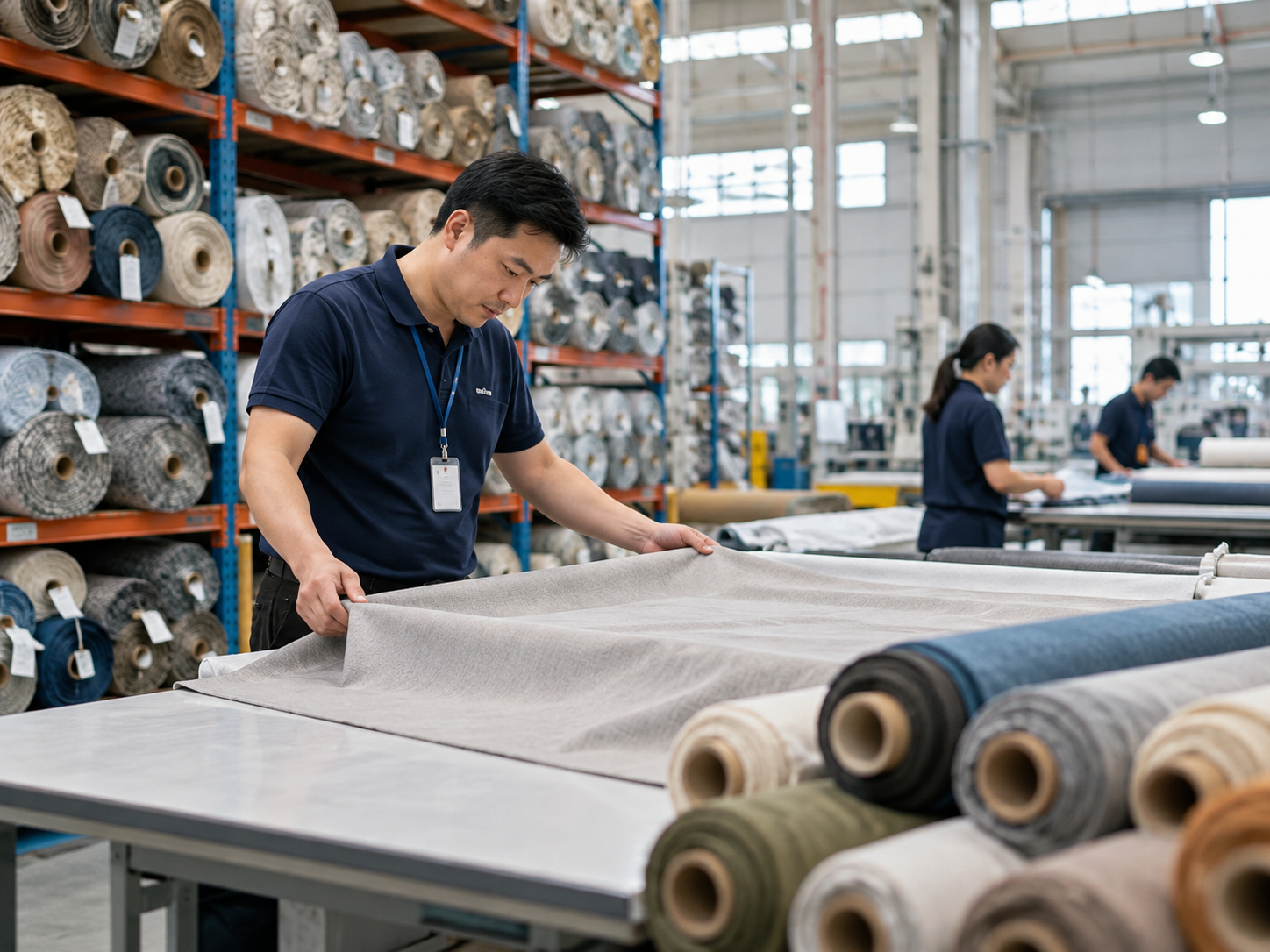
Buyers interested in purchasing outdoor upholstery fabric need to consider several issues in advance of making their purchases.
- Will the fabric be appropriate for use in the desired piece of furniture?
- What is the composition and structure of the fabric?
- Which tests for UV resistance, abrasion resistance, water repellency, colorfastness or any other characteristics are available?
- What sample will serve as a reference for the bulk purchase?
- Does the supplier have the capability to develop special colors or other characteristics of the fabric?
- What is the MOQ and the lead time for that fabric?
- What will be the control method for the bulk fabric?
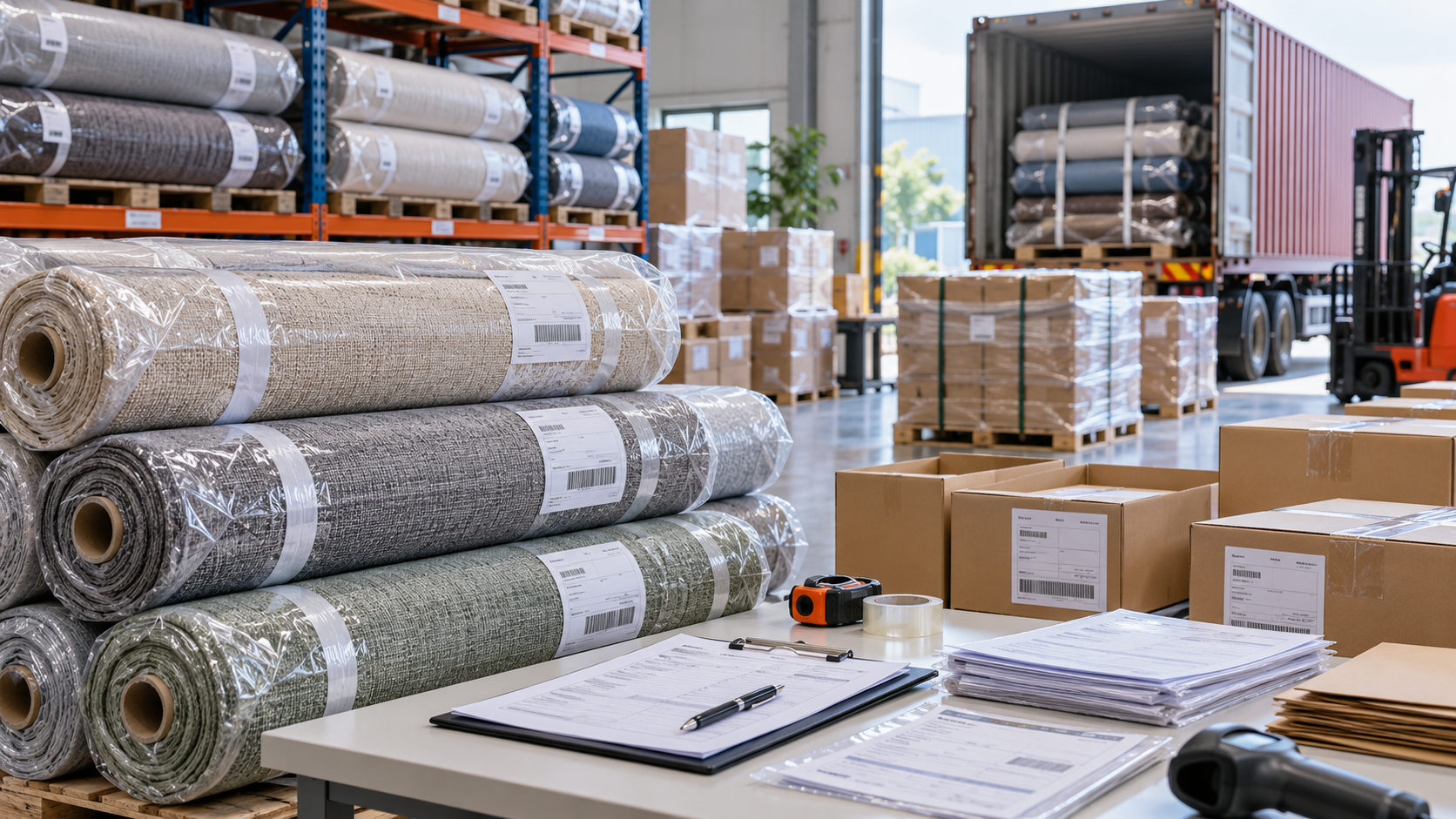
- How will the rolls be packaged, marked and identified?
The supplier should be able to provide answers to these questions beforehand. It will make the process of selecting the fabrics much easier for the buyer.
Frequently Asked Questions
1. What is outdoor upholstery fabric?
Outdoor upholstery fabric is fabric which has been selected or designed for furniture that will be used outdoors or in partially covered places. Depending on the use of the fabric, buyers will need to consider factors such as sunlight, moisture, cleaning and abrasion.
2. What type of material should be chosen by B2B buyers for outdoor furniture?
There is no one type of material that will suit all projects involving outdoor furniture. Solution dyed acrylic fabric, olefin outdoor fabric, and polyester outdoor fabric are some of the materials used in these types of projects, and buyers need to compare the materials’ construction, finishing, testing and application before choosing one.
3. Is water-resistant outdoor fabric waterproof?
The water resistance of fabric indicates how the fabric reacts to wetting, while the final cushioning or upholstered furniture system may still absorb moisture.
4. Can outdoor upholstery fabric be made to order?
Depending upon the method of production, outdoor fabric made to order may involve changes to the color, pattern, finish, structure or performance needs of a particular furniture project.
Discuss Your Outdoor Furniture Project
The process of choosing the right outdoor upholstery fabric is influenced by a number of factors, including how and where the furniture will be used. Of course, the material itself is important, but criteria such as UV exposure, humidity, abrasion, maintenance, construction, and performance of the selected fabric are equally important.
When it comes to furniture brands, manufacturers, hotel buyers, and sourcing teams, it is much more efficient to identify these criteria prior to sampling or production. It provides an opportunity for both sides to choose the fabric in a more rational way and evaluate the outcome.
If you have an outdoor furniture project, discuss your application, quantity, color direction, and performance criteria with EnjoyTex. Our team will be glad to assist with fabric selection and sampling.
CTA: Discuss Your Outdoor Furniture Project